Showing posts with label Pesto. Show all posts

Sunday, March 18, 2012

Arugula Pesto

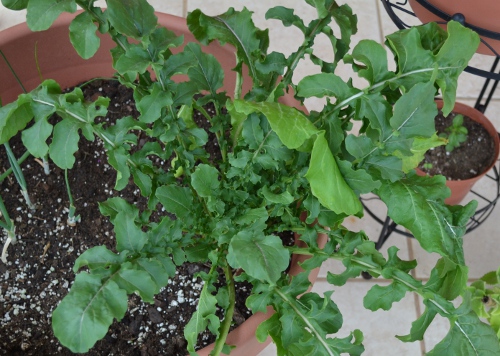
Our first Arugula. Has grown quite a bit, right?
Little has been said about our arugula since October's Arugula Follow Up. Our first plant has been growing and growing. It's now at the point where it will flower. We made a delicious salad for Thanksgiving with some of its leaves mixed with some lettuce (as we have mentioned before, arugula has a peppery flavor and ours is quite spicy so we can't use it by itself). We have also managed to grow one more arugula plant. Both plants have lots of leaves.

Because its flavor is so particular, arugula is also frequently used cooked as a vegetable. In this form it is used in pastas or even in pizzas, added just before the baking period ends or immediately afterwards, so that it will not wilt in the heat. Similar to basil, it combines really well with mozzarella cheese and sun-dried tomatoes and is good for pesto. Unlike basil, it is considered an aphrodisiac.(Editor's note: It seems Jessica is throwing out a hint to all of our female readers. Gentlemen, if your wife starts using arugula instead of basil, "It's on!".)

The process of making arugula pesto is not too different from the one described on our Basil: Yucky, Yummy Edition. Our previous recipe yielded pesto for about 6 to 8 people but I edited today's ingredients to make a dinner for 2.

Ingredients
(Mickey is the salt and pepper)
Ingredients:
- 1 cup packed fresh arugula
- 1/4 tablespoon minced garlic
- Salt and ground pepper
- 1/4 cup pure olive oil
- 1 tablespoon pine nuts, toasted
- 1/4 cup freshly grated Parmesan

Directions:
The secret for making pesto with arugula is to blanch the leaves. Plunge the arugula into boiling water for about 15 seconds. Next, plunge the leaves into ice cold water to stop the cooking process. Shake off the excess water and drain well.

Pesto with extra pines nuts
Squeeze the water out of the arugula with your hands until very dry. The rest of the process is quite similar to basil pesto. Chop the arugula and put in a blender or food processor. Add garlic, salt and pepper to your liking, olive oil, and a tablespoon of toasted pine nuts. Blend for at least 30 seconds. Add the cheese and pulse your blender to combine. You're done.

Prepare a meal and let us know about your experience with arugula in the comments section.

Sunday, September 18, 2011

Does it come in purple?

Purple Ruffles Basil
By now you must have figured out that our favorite plant is basil (evidence:In the beginning there was basil, Tricks and Treats - Basil and Tricks and Treats - Basil Part 2).  Jessica uses basil in everything from meat seasoning to salads. Everyone should have at least one plant in their garden. We have two.

A few days ago we were at Home Depot's when I stumbled upon an odd looking plant that I had never seen before. It was about six inches tall with ruffled purple leaves. Imagine my surprise when I read the tag: "Albahaca Mora" ("Purple Basil"). WTF! Purple Basil! It couldn't be. Its leaves didn't have the shape of basil, it was purple, and it didn't smell quite like basil. So what this plant incorrectly labeled? Was I being duped? I didn't care. I had to buy it. (Editor's note: Impulse buys are not recommended or endorsed by Container Garden PR, Inc or its affiliates. Always research plants before you buy. Now back to our regular programming.)

When we got home I noticed that its leaves weren't solid purple instead it had green edges. Now I was sure I was duped. So we got on the internet to see if purple basil existed. Thankfully it did. What we had bought was a sweet basil variant called "Purple Ruffles". It's commonly used to create purple pesto and basil vinegar (which Jessica plans on doing and documenting). Supposedly it also has a slightly different flavor than common sweet basil. We still haven't tasted it yet so we can't comment on its flavor yet. We also read that the leaves can lose their purple color for various reasons including too much sun or too much humidity so we'll have to experiment with various locations to maintain the striking purple color. Keep tuned for updates on how this purple basil and all our other plants are doing.

Saturday, August 13, 2011

Tricks and Treats: Basil - Yucky, Yummy Edition

Hi again, good to have you back! Today we have another edition of Tricks and Treats© for basil: Yucky, Yummy Edition! Specifically, we’ll talk about basil common diseases and some ideas on how to use basil. 

Tricks for the Yucky!

Always starting at the root… root rot is fairly common with basil. As the fungi needs moist cool soil to grow in, root rot might present by over-watering the plant. As a first sign, be alert for lower foliage that turns yellow or drops off the plant. The roots of the plant will appear brown and mushy, unlike healthy roots that appear firm and tan in color. To get rid of it, change the soil of the plant and decontaminate the container with a mix of 9 parts water, 1 part bleach.

Basil can suffer from several foliar diseases that can ruin the crop and reduce yield.
Gray Mold on our culantro leaves
A common disease of basil is gray mold; it looks exactly as it sounds. It can also cause infections post-harvest and is capable of killing the entire plant. Black spots can also be seen on basil foliage. Both can be controlled by spraying the leaves with a mix of half a gallon of water and one teaspoon of baking soda (not powder!).

Treats are the Yummy!

Basil Vinegar
Take all your excess basil snippings (which you’ll have lots when the plant starts flowering), stuff them loosely into a glass jar with a fitting lid, and pour enough vinegar to cover all foliage. Red wine vinegar is a great complement for basil. Wait about a week, during which time the vinegar will extract the flavor, aroma and color from the basil. Strain off, discard the snippings and voilĂ  you have made basil vinegar!

When using basil vinegar for cooking, use your imagination. It sure can make a delicious salad dressing but you could also add it to pot roasts, stews, sauces or even over steamed vegetables. If you enjoy basil fragrance so much, another delightful use for basil vinegar is in the bath. Oh yes, soak yourself in aromatic hot water heaven. Add about a cup of basil vinegar to the bathwater, slip in and enjoy. Basil stimulates blood circulation so it is both invigorating and relaxing. Don’t be afraid to sink in and start making bubbles, basil vinegar can also be used as hair rinse. The vinegary smell dissipates quickly and you’re left a gentle herbal fragrance on your hair.

Pesto
Nope. The Pesto Night Story is not today. Pesto is traditionally made with pine nuts, garlic, olive oil, basil, and Parmesan cheese. It's most popular use is tossed with pasta.
Ingredients:
  • 4 cups basil leaves
  • 1/2 cup grated fresh Parmesan cheese
  • 2 tablespoons coarse-chopped pine nuts
  • 2 garlic cloves, peeled
  • 3 tablespoons extra-virgin olive oil
  • 1/4 teaspoon salt
Preparation:
In a food processor or strong blender, with the motor running, drop the pine nuts and garlic through the feed chute. Process until finely minced. Add the olive oil and pulse three times. Add basil, Parmesan cheese, and salt to the processor bowl. Process until finely minced. Refrigerate leftovers and use within 1 week. 

Have you bought your basil seeds? What are you waiting for!